
Africa’s healthcare systems have historically relied on a combination of government funding, philanthropy and external development funding. But as governments face increasing fiscal pressure and international funding becomes less certain, the question of how Africa will finance its healthcare future is becoming increasingly important.
The withdrawal of USAID has further highlighted the uncertainty around external healthcare funding and the need to consider other sources of capital. This raises an important question: how can more domestic and private capital be mobilised to finance healthcare across Africa?
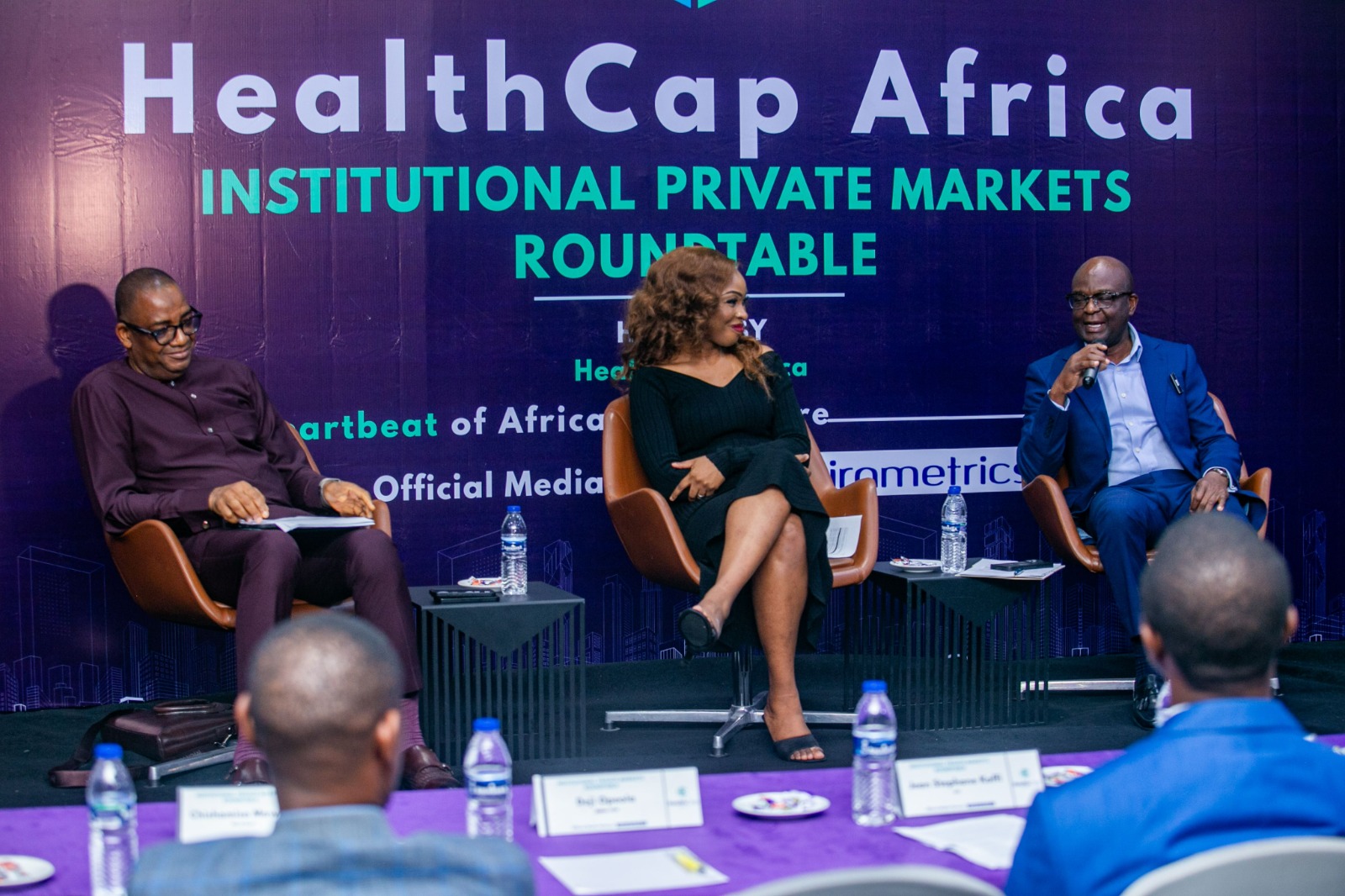
This was the focus of HealthCap Africa’s Healthcare as an Asset Class: Private Capital Roundtable, which brought together investors, development finance institutions and regulators to discuss the role of private capital in strengthening Africa’s healthcare sector.
The conversation covered a range of issues around healthcare financing, private capital and the role of domestic institutional investors. Here are some of the key highlights from the discussion:
1. Africa has relied heavily on philanthropy to finance healthcare, but that model is becoming less certain.
Africa has historically relied heavily on government, philanthropy and external funding to finance healthcare. With USAID gone and other international funding becoming less certain, there is a need to mobilise more domestic capital.
2. Big companies are built, not born.
One major thing every rich country has managed to do is find a way to make their small companies become big companies. Big companies do not just start as big companies. They start from the private market before entering the public market.
Big companies pay proper tax to the government, create jobs and list on the stock exchange.
Historical data from the U.S. shows that post-1970s ERISA reforms doubled top company creation, demonstrating how capital architecture can directly change the scale of businesses an economy can produce. Twenty percent of the top 300 U.S. public companies can be traced to VC market reforms.
3. Specialised healthcare funds show what is possible when private capital is directed towards the sector.
Healthcare has transitioned into a major global private-market asset class, with over 505 specialist funds across North America and Europe raising $320 billion solely for healthcare. Emerging-market funds such as Quadria Capital have also built multi-billion-dollar healthcare platforms, with $4.2 billion+ in AUM.
Specialised healthcare funds are able to provide the expertise needed to invest in the sector.
4. The healthcare financing gap has real consequences for health outcomes.
Africa has the highest burden of disease on the continent, but the lowest levels of private healthcare investment. Maternal mortality, child mortality and poor surgical outcomes in Africa are among the worst healthcare outcomes in the world, and this is in part due to a lack of investment.
Governments across Africa, including Nigeria, are under strain, and there is limited physical space for healthcare.
5. India provides an example of what sustained private investment in healthcare can achieve.
India’s approximately $19 billion private equity and venture capital investment in healthtech over a decade coincided with a drop in maternal mortality from 384 to 80.5 per 100,000 live births between 2000 and 2023.
Quadria Capital is another example of the scale of private capital that can be directed towards healthcare. They are focused on investing in healthcare in India and have raised billions of dollars for the sector.
Many Nigerians go to India for healthcare. Imagine how much private capital has gone into building their healthcare system.
6. African healthcare needs private capital to complement government and philanthropy.
African healthcare cannot rely solely on strained government budgets or grant money. Private capital acts as the third vital pillar needed to finance sustainable assets, build infrastructure and scale innovation at institutional volume.
The question now is how do we get more private capital into healthcare?
7. African pension funds represent a significant pool of domestic capital.
Pension funds are the largest pool of capital in most African countries, including Nigeria. But the appropriate regulation needs to be in place to ensure that pension funds have access to healthcare.
Deploying pension funds into healthcare private markets requires balancing saver protection with high-yield investments. Managers, institutional investors and regulators, including the SEC and PenCom, must collaborate to build transparent, governable and liquid products.
8. Nigeria has a significant opportunity to deepen its local capital ecosystem.
Between 2021 and 2025, Nigeria captured 513 Seed+ deals, comprising over a quarter of the continent’s early-stage activity, and is home to five of Africa’s eight unicorns.
The opportunity is to double down on deepening local capital pools around sectors with massive unmet demand rather than pivoting away from innovation.
9. The right investor needs to match the right stage of a business.
During a discussion about the lack of bankable projects, Mories Atoki, CEO of ABC Health, said there needs to be more early-stage investors.
“There’s no such thing as an unbankable project. There’s only such a thing as a risk-investor match.”
She noted that some investors are early-stage, while others are later-stage, and that the right investors need to be matched to the right stage of a business. She also emphasised the need to invest in the early-stage ecosystem if businesses are to get to growth.
10. Private capital is already building healthcare infrastructure in Nigeria.
Humphrey Oriakhi of PAC Capital spoke about how they built a 250-bed multi-specialty tertiary hospital in Gateway, Abeokuta. This was done with private capital.
11. Innovation can help overcome regulatory barriers.
Mr. Deji Alli noted that “Innovation can overcome regulation,” highlighting the role of innovative approaches in navigating some of the challenges facing private investment and business growth.
12. HealthCap Africa’s experience demonstrates that impact and commercial returns can coexist.
HealthCap Africa’s pilot fund generated a 25% IRR, 5.01x DPI and 7.19x TVPI, while impacting over 2 million lives and creating 1,000+ jobs.
This demonstrates the commercial viability of health and technology investments in Africa and the potential for a sector-focused fund to create impact beyond a single company.
From the DFI Side
The discussion also brought perspectives from development finance institutions on what is needed to unlock more private capital for healthcare.
AFC: President Samaila Zubairu, represented by Jeane Koffi Stephane, said that AFC is willing to show how it built its fund-of-funds structure, because this structure might be more appropriate for a pension fund, where they can spread their risk. He also said that AFC would share their learnings.
AFC recently launched its $100 million fund for venture capital and has already invested in two funds, with plans to do a lot more.
IFC: Represented by Dr. Olumide Okunola, the IFC spoke about the importance of mobilising local capital into healthcare.
World Bank: Chishamiso from the World Bank said that government policies are important and that the government needs to create the right policy environment.
From the Regulators’ Side
Regulators also shared their perspective on how the regulatory environment is evolving.
Both PenCom and the SEC have continually evolved their regulation to encourage more private-market investment. Historically, the focus was heavily weighted towards fixed income, but regulators have now recognised the importance of alternatives, both for returns and for the economy, and have been dynamic in evolving the regulation.
Even when there was a push towards poor regulation, the regulators responded with evidence of how they have been quick to respond to the needs of the private market and continued to do so.
In conclusion, the roundtable highlighted the growing need to consider how healthcare in Africa can be financed beyond traditional sources of funding.
With international funding becoming less certain and governments facing fiscal pressure, the discussion focused on the role that private capital, domestic institutional investors and specialised healthcare funds can play in financing the sector.
From the experience of healthcare-focused investors in other markets to the growing role of African pension funds and examples of private capital already being deployed in Nigerian healthcare, the conversation centred on one key question: how do we get more private capital into healthcare?
The roundtable was an opportunity to bring investors, development finance institutions and regulators into the same conversation around healthcare as an asset class and the role private capital can play in the sector.